


CNI Cybersecurity Controls

CNI Cybersecurity Controls
Bahrain continues to be prosperous in an increasingly digital and innovative world. Therefore, it is essential to have strong and resilient cyber security measures. Moreover, as technology and internet connectivity advance, individuals, organizations, and nations are increasingly vulnerable to cyber threats such as crime, sabotage, spying, and vandalism. Bahrain has prioritized establishing a secure cyberspace by developing National Cybersecurity Strategy and implementing many initiatives.
One of the strategy objectives is protecting Critical National Infrastructure (CNI) entities. Critical National infrastructure is defined as the critical assets that are essential for the Kingdom of Bahrain for functioning purposes upon daily life dependency. Within this infrastructure, certain elements are extremely critical to the country.
Their loss or compromise could directly result in loss of life, affect the delivery of essential services, or otherwise cause widespread economic or social impacts. Accordingly, the following CNI sectors were identified for the Kingdom of Bahrain: Gas, Electricity & Oil (GEO), Financial Services, Information & Communications Technology (ICT), Healthcare Services, Government Services, Critical Industry, Transportation.
Therefore, National Cyber Security Center (NCSC) developed the National Cybersecurity Framework for Bahrain and CNI cybersecurity controls to minimize technological risks, maximize technical benefits, and enhance the cybersecurity environment throughout the CNI sectors in Bahrain.
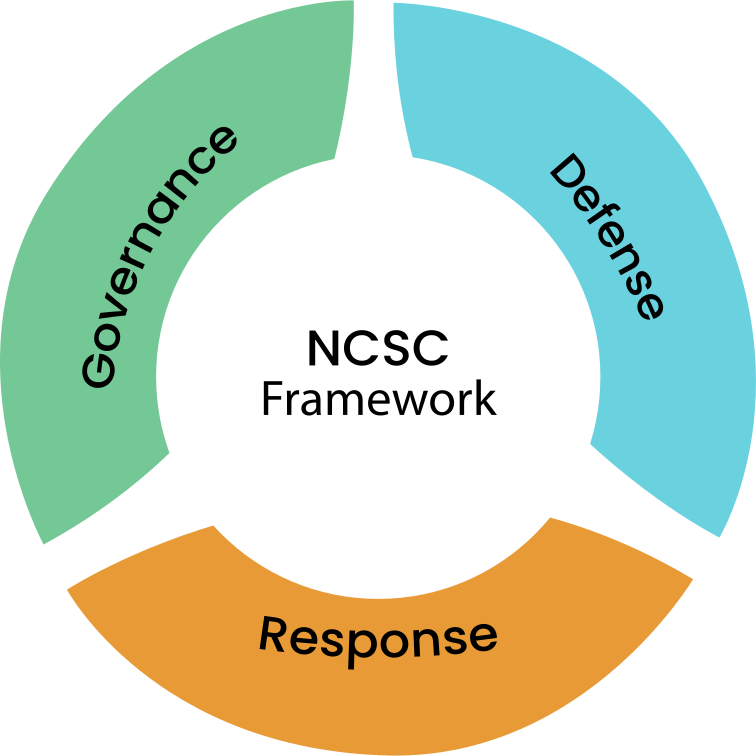
NCSC Core Function
Governance
Protecting the Critical National Infrastructure by enforcing effective governance.
Defense
Providing and establishing cybersecurity security measures with consideration of best practices to have a resilience Infrastructure.
Response
Having a national power to contain and eradicate the threats and incidents.

The National Cybersecurity Framework for Bahrain includes cybersecurity controls and measures and proposes appropriate required training paths, including certifications and skills that equip the teams responsible for protecting CNI. This framework was developed based on NIST standards and through nationwide efforts and consultation with Critical National Infrastructure (CNI) entities. Further, NCSC has collaborated with sector regulators and consultants to develop six additional detailed standards addressing cybersecurity requirements for each CNI sector based on distinct characteristics of the sector’s environment.
Cybersecurity Training
Cybersecurity training is an essential investment that requires adequate addressing and attention, as operating without a qualified cybersecurity workforce could threaten the overall country by providing a false sense of security. Following best practices and obtaining cyber security certification will qualify the individuals to protect entities’ information systems, networks, data, and assets. The Kingdom of Bahrain supports cybersecurity training by recommending various certifications in collaboration with private institutes and accredited certifications that are essential and required to raise the cyber security level in the kingdom. The NCSC has developed Cybersecurity Training and Certifications document that addresses the essential and accredited cybersecurity certifications for Critical National Infrastructure (CNI) sectors. The certifications are classified into three levels, “foundation, intermediate, and expert,” listed within Four cybersecurity functions according to the National Cybersecurity Framework, which aims to minimize the technological risks, maximize the technological benefit, and enhance the cyber security environment throughout the Kingdom.
CNI standards

Government Cybersecurity Controls

Healthcare Cybersecurity Controls

Financial Cybersecurity Controls

Oil, Electricity, and Gas and Critical Industry Cybersecurity Controls

Telecommunications Cybersecurity Controls

Transportation Cybersecurity Controls